Analysis of European ancestry
Advances in population genetics over the past several decades have dramatically improved our understanding of human biological diversity, and this changes have been decisevly in progressing towards a better understanding of human genetics. By analyzing genetic variation across thousands of individuals from different geographic regions, scientists can reconstruct patterns of migration, isolation, admixture, and demographic change that occurred over tens of thousands of years.
One commonly misunderstood set of tools used in this research are genetic clustering algorithms, such as ADMIXTURE, STRUCTURE, and principal component analysis (PCA). These methods are often misinterpreted as revealing discrete biological “ pure races”, when no race has reached its pure form to this days, well maybe with an exception, the Sentinelse, but apart of that all human populations have some degree of mixing with other peoples, for example there is not a Polish or Italian race, but a gentic populatin is the sum of varios ancient populations in less or more degree. In reality, they model statistical patterns of genetic similarity, which vary depending on sampling, assumptions, and analytical parameters and the gentic composition of a specific area.
This article provides a detailed, beginner-friendly explanation of how these analyses work, what information they can and cannot provide, and how to interpret different clustering resolutions responsibly—without conflating statistical models with rigid biological categories.

A central revelation from these recent highresolution genomic studies is the rejection of a simplistic model where European early farmers emerged from a single genetically distinct population in the Fertile Crescent. The demogenomic modeling by Marchi and colleagues demonstrates that the ancestors of Anatolian and European Neolithic populations were themselves the product of a multiphase mixing process, and recent studies reject the idea of substantial heritage in Anatolian Hunter-Gathers of Natufian or any other Middle Eastern genetic group. These western early farmers emerged from a deep ancestral population related to both Caucasus hunter gatherers and Iranian Neolithic groups, as we said before AHG which then experienced two significant pulses of gene flow from Western hunter gatherer metapopulations one around thousand years ago and another around thousand years ago, but were not siginificant. This admixed population then underwent a protracted period of extreme genetic drift and isolation lasting over two millennia as they expanded westward through Anatolia This bottlenecked expansion not only differentiated them sharply from their Southwest Asian ancestors but also erased clear signals of their hybrid hunter gatherer farmer origins making them appear as a distinct genetic cluster
This complexity is mirrored in the detailed transect from the Levant to Central Europe The genetic impact of the Neolithic transition was starkly different east and west of a conceptual Great Divide running from the Black Sea to the Baltic In regions west of this line such as the Balkans and Central Europe the arrival of farming was accompanied by large scale ancestry shifts where Anatolian farmer related genetics largely replaced local hunter gatherer lineages, normally this process was stronger there more a region is near Anatolia. This process occurred through a stepping stone model of demic diffusion along the Danubian corridor with minor but consistent levels of admixture with local hunter gatherer communities(WHG) at each stage. Conversely east of this divide in the Baltic Ukraine and western Russia hunter gatherer populations(WHG and ANE, and the later formed EHG) persisted genetically largely unchanged for thousands of years despite adopting some Neolithic material culture like pottery showcasing a primary mode of cultural diffusion in these regions.
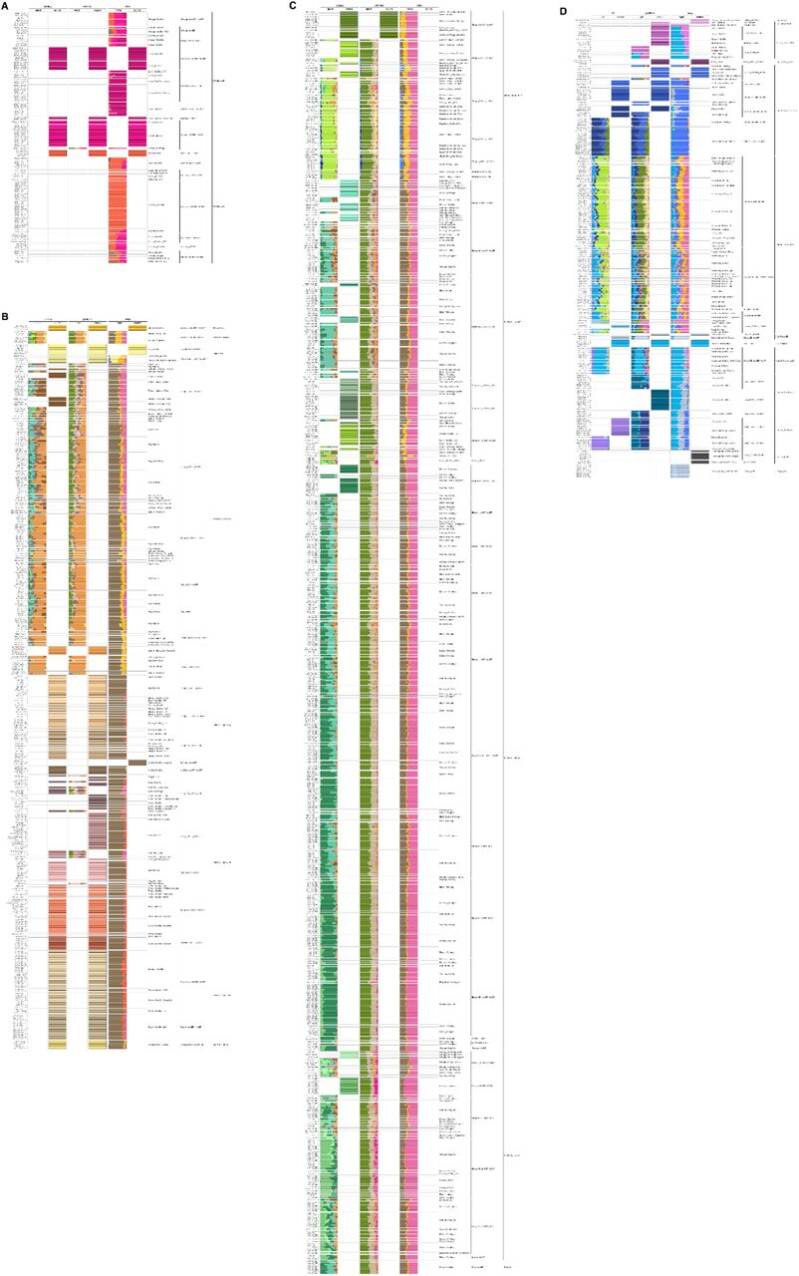
The Pivotal Role of Postglacial Hunter Gatherer Dynamics
The deep population structure of Europe was set in motion long before the Neolithic. The last Ice Age acted as a profound demographic crucible European hunter gatherer populations diverged from their Southwest Asian counterparts around thousand years ago coinciding with the Last Glacial Maximum, deeping their differences. This split was followed by a catastrophic bottleneck among European hunter gatherers reducing their genetic diversity to very low levels, they are studies that prove that only some thousand of WHG were alive at one point during that times, probably generating really positive eugenics in the long-term. Despite this low diversity which is observable in long runs of homozygosity these groups maintained relatively large effective population sizes after recovering from this is relatively low time and likely due to long distance networks and exchanges. The subsequent warming period triggered expansions and further diversification leading to the formation of distinct western and eastern European hunter gatherer( a mix between arround 1/4 WHG and 3/4 ANE, group majoritly Caucasoid but with 35 per cent of ancestry from a distnat East Eurasian group,the most important group of modern East Asians) clades by around thousand years ago.
These hunter gatherer groups were not passive bystanders but active contributors to the emerging genetic landscape of the Holocene. The study of genetic outliers reveals a surprising level of mobility even in the Mesolithic. For instance genomic evidence shows northward migrations of at least three distinct hunter gatherer ancestries into Scandinavia a southern European related source into Denmark a Ukrainian related source into southern Sweden and a northwest Russian source into northern Norway, this will generate a different WHG identiy in Scandinavia, SHG. Furthermore unexpected genetic affinities are detected early on such as the connection between Middle Don River hunter gatherers and populations from the Caucasus around thousand years ago a critical precursor to later Steppe formation, process was progressive but not slow.
The Dual Transformation of Scandinavia and the Steppe Genesis
Scandinavia provides a crystal clear example of the transformative power of these demographic waves. The region experienced two near complete genetic turnovers within just a millennium First around thousand years ago Neolithic farmers with Anatolian ancestry largely replaced the local Mesolithic hunter gatherers with minimal admixture as evidenced by a continuous Danish transect from the Koelbjerg Man to the Bronze Age. Then around thousand years ago a second wave associated with Steppe pastoralist ancestry swept through again replacing much of the farming population. This sequence underscores that major cultural transitions in this region were overwhelmingly driven by movements of people rather than some isolted hypotesis thought decades ago.
The origin of the Steppe pastoralists themselves a group that would later reshape Europe and parts of Asia is clarified through these studies. The Yamnaya and related cultures derived their ancestry primarily from a mixture of two sources hunter gatherers from the Middle Don region who already carried some Caucasus related ancestry and a direct pulse of ancestry from Caucasus hunter gatherers This synthesis occurred on the Pontic Caspian steppe giving rise to a distinct genetic profile that would be propagated with astonishing speed across the continent.
The Machine of Migration and Cultural Interaction
The expansion of Steppe related ancestry after thousand years ago was markedly faster than the earlier Neolithic spread reaching from the eastern European plains to the Atlantic coast within roughly a millennium. This expansion was not a simple spread of a pure population but was intricately linked to earlier Neolithic groups. Notably Steppe ancestry often spread alongside genetic components associated with the Globular Amphora Culture suggesting the Corded Ware (IE mixed with some local components) complex which disseminated Steppe genes across Northern Europe emerged from a zone of intense interaction and admixture between incoming Steppe pastoralists and established GAC farming communities in Eastern Europe, some suggest they have sort of alliance or GAC have some servitude to IE. This indicates a complex sociocultural process where migration and integration were intertwined.
Later in the Nordic Bronze Age fine scale analysis reveals further internal dynamics. Within Scandinavia after the initial Steppe influx distinct genetic clusters succeeded one another first an early Corded Ware related group with Y haplogroup R then a cluster with central European Bell Beaker affinities and Y haplogroup R and finally the emergence of a distinct Scandinavian cluster dominated by Y haplogroup I which became the dominant lineage and forms the core genetic ancestry of later Iron Age and Viking Age populations.
The Imprint of Selection and Phenotypic Change
Beyond demography these ancient genomes allow us to directly trace natural selection acting on human populations as they adapted to new diets lifestyles and environments The transition to agriculture imposed strong selective pressures Contrary to some previous estimates selection on the FADS gene cluster associated with fatty acid metabolism began prior to the Neolithization of Europe within the ancestral populations in Southwest Asia and continued as they expanded Similarly the lactase persistence allele started its increase in frequency before the major expansion of Steppe related groups indicating a more complex selective history than a simple co diffusion with pastoralism
Ancestry stratified analyses reveal that many signals of selection are masked in modern populations due to the blending of distinct ancestral backgrounds. For example strong selection for lighter skin pigmentation at the SLC A locus occurred independently and asynchronously on different and several ancestral backgrounds. Anatolian farmer haplotypes were selected earliest while Western hunter gatherer haplitopes showed the weakest selection during the Holocene. Other selected loci are linked to immunity neurodevelopment and metabolism including the HLA region and the MAPT locus associated with neurological disorders highlighting the profound physiological changes wrought by sedentary life increased density and novel diets.
Stability Amidst Flux The Historical Period Paradox
Moving into the historical period the focus shifts from deep prehistory to the last three millennia Analysis of Imperial Roman and later genomes presents an intriguing paradox. Despite the immense political and economic connectivity of empires like Rome which facilitated widespread individual mobility and created genetically heterogeneous urban centers the broad scale population structure of Europe remained remarkably stable from the Bronze Age to the present day, and thats a so clear eveidence that even the Marxist academia of this days accept this for the most part.
Genomic studies of Imperial era sites across Europe and the Mediterranean reveal a startling degree of individual mobility. Approximately eight percent of sequenced individuals from this period can be identified as first generation migrants or their direct descendants from distant regions North Africans, appear in Austria Levantines in the Balkans and Armenians in Italy This reflects the efficient travel networks and economic military and slave trading networks of the Roman Empire.
However simulations show that this level of long range migration if coupled with local intermarriage should have rapidly eroded the geographic genetic structure of Europe within a few centuries. The fact that this did not happen and that modern European genetic maps still correlate strongly with geography suggests that much of this ancient mobility was transient Individuals moved but did not always successfully integrate and reproduce in large numbers within the local gene pool and limitation to the migrants influence by both Roman authorities and local populations of Europe, apart of that with the collpase of the Roman Empire, all this non-European heritage will be partially erased.This points to phenomena like the urban graveyard effect where high mortality in cities required constant inward migration to sustain population levels and significant reproductive barriers or endogamy within established rural populations maintaining regional genetic distinctiveness, that were clear. This delicate balance between connectivity and local continuity defines the genetic legacy of historical periods.

Añadir comentario
Comentarios